Sunday, June 5, 2011

Stay Connected

In the Gospel of John we read the following:

...And I will ask the Father, and he will give you another Advocate to be with you always; the Spirit of truth...I will not leave you orphans; I will come to you....  (John 14: 16-17a; 18)

These words, spoken by Jesus to his disciples shortly before he went to his death must have been consoling for the disciples.  In Jesus' time, orphans were a sorry lot.  There were no orphanages or government agencies dedicated to serving children; orphans were left to whatever the society would do for them which was very little.  So being promised that they would not be left as orphans had to be a consolation.  Jesus also promises that the Father will send another gift - the Spirit of truth to guide the disciples as they moved forward in their journey of faith.

What do we do with a gift we have received?  We usually want to show it off and let others know what a great gift it has been.  We also want to stay connected to the one who has given us the gift.  What about the gift of the Holy Spirit in our lives?  Are we grateful for the gift; do we want others to know how grateful we are?  And how do we stay connected with the great gift-giver God?  The primary way we do this is through prayer.


Prayer can take many forms.  Some like to pray quietly in their rooms or while riding in the car; some while listening to music.  Others may choose more formal prayer such as the Rosary.  Whatever form of prayer we choose, it is important that we stay connected to the giver of all our gifts - God.  For us as Catholic Christians, the most important way we can pray is by coming each week and joining around the eucharistic table.  The Mass provides us with three important forms of prayer: we begin our liturgy with a recognition of our sinfulness and ask God's mercy and forgiveness; at the Prayer of the Faithful (or General Intercessions) we ask God for the needs of our Church, the world, our community and ourselves.  Then we come to the central part of the liturgy when we offer again to the Father his Son, Jesus, in the eucharistic prayer - a prayer of thanksgiving.  So we have the prayers for forgiveness, prayers of petition and prayers of thanksgiving.

These types of prayers should be a part of our own personal prayer as well.  At times we need to ask forgiveness for sins we have committed.  We are always in need and can go to our Father with our requests, and we should never forget to offer thanks for all that we have been given.  But some times our prayer life may become dry or sterile; we may find it difficult to pray.

The story is told of a missionary in a third world country who was assigned a car when he arrived at the mission.  The car, however, would not go without first being pushed.  To assist him in doing this, he arranged with the local school to have some of the older children push off his car when he began his mission rounds.  Then he would either park on a hill or leave the car running as he made his rounds.  This went on for two years.  Poor health required that he leave the mission.  He greeted his replacement and proceeded to tell him about the car problem.  At this point, the new missionary popped open the hood of the car and found a loose cable.  He tightened the cable, got into the car and when he turned the ignition the car immediately started.  The problem had been a loose cable; the missionary had had a loose connection.

Sometimes we have a loose connection in our prayers.  We need to ask the Holy Spirit to help us find the problem and fix it.  It may simply be that we need to find some time each day to spend in prayer with our God.

There are so many ways we stay connected these days: cell phones, texting, e-mail and the Internet.  This blog, for example, through the power of the Internet has reached over forty countries around the world and it does so in an instant.  But we don't need to text God or send him an e-mail.  God is always ready to receive our prayer; all we have to do is open ourselves to hear God's message to us and to respond in our hearts.


One way we can offer our whole day to the Lord as prayer is something called the "Morning Offering."  It is a prayer that I have found to be a wonderful way to begin the day by offering all that we do (except our sinful acts) as a prayer.  The prayer can be something like this:

O Sacred Heart of Jesus, I offer you all my prayers, works, joys and sufferings of this day in union with your Sacred Heart and in thanksgiving for all the gifts I have received from you.

A man was wandering around heaven one day when he had a vision of a church preparing to celebrate the liturgy down on earth.  He could see the priest opening his mouth to offer the prayers but he couldn't hear anything.  He saw the choir stand, opening their mouths to sing while he saw the organist's fingers play across the keys but he could hear nothing.  Jesus happened by at the moment and the man asked him why he couldn't hear anything coming from the vision.  Jesus replied, "Unless they sing and pray with their hearts, we cannot hear them up here."

May we always sing and pray with our hearts; may we always stay connected to our loving and amazing God.

Wednesday, May 25, 2011

The Rapture Didn't Come - What's Next?

But of that day and hour, no one knows, neither the angels in heaven, nor the Son, but only the Father.  Be watchful!  Be alert!  You do not know when the time will come.        (Mark 13: 32-33)

A radio preacher in the United States predicted (based upon some calculations he had made and what he considered to be a "code" that he found in the Scriptures) that the world would end this past Saturday, May 21 at 6 p.m. (Eastern Standard Time).  Obviously his "calculations" were incorrect.  He is now saying that this was to be a time of spiritual awakening and the end will definitely come this coming October on the 21st.

A large number of people believed his prediction and many worked very hard by advertising to bring the prediction to the attention of everyone so that the righteous would be ready for the "rapture" when it occured.  I must say I admire the fervor with which they attempted to present their message but I feel sorry for the number of people who spent large sums of money to advertise this only to have their savings wiped out because of the failure of the prediction to come true.

What do we really know about the end of the world?  The quote from Mark's Gospel above makes it clear (to me, anyway) that no one knows - no one has the right calculations to predict when the end will come.  Even Jesus himself states that he has no knowledge of that time.  In the time after Jesus' death and resurrection many (including St. Paul) felt that the end of times would probably come soon.  Later they were to revise their thinking and here we are twenty plus centuries later still wondering about it.


In an earlier post (Is the World Coming to an End? - March 18, 2011) I spoke about this and raised some questions about what we are doing to the great gift of this earth that God has given us.  I can understand why some would feel our times are presenting some premonitions about the end times when we consider what is going on in the world with wars and with violent weather that has destroyed many homes and businesses (in April alone in this country there were over 800 tornadoes and one of the most violent just decimated a part of a town in Missouri this past week).  Again we might ask - what are we doing to our world; is the progress we have made on so many fronts in technology, etc. causing havoc in the environment?  It is a question worth pondering.

Getting back to the "rapture," is there a question to be raised here as well?  Each one of us will face our own personal judgment at the hands of our God when our earthly time is finished and at some point the world as we know it will come to an end (I don't believe any of us can predict it).  One of my good friends, Father Bob Longobucco, was interviewed by a local television station prior to last Saturday to ask his opinion about the end of the world.  He stated (and I think it was a wonderful thought) that Jesus first came to this earth in love and with compassion and he believed when he comes again he would come in the same way.


When we face our judgment, what will be asked?  To paraphrase the Gospel of Matthew (Chapter 25), I believe God will ask us:

       I was hungry - did you feed me?
       I was thirsty - did you give be something to drink?
      I was a stranger - did you welcome me?
      I was naked - did you see that I was clothed?
      I was sick - did you tend to my needs?
      I was in prison - did you visit me?

These are the questions we will be asked.  Because as Jesus tells us:  Amen, I say to you, whatever you did for one of these least brothers and sisters of mine, you did for me.  (Matt. 25:40)

I don't think we have to worry about October 21st.  We simply need to ask ourselves - are we ready to answer the questions God will put before us when we come to judgment?  The time is now to be ready - it is always the time to be ready.

Saturday, May 7, 2011

Mothers - A Tribute

We come again to the second Sunday in May when we honor and celebrate our mothers.  May the Lord bless all those who hold the title of mother in any way; may you have a blessed day!  I would like to take the opportunity of this post to honor two mothers who have been special in my life.  Let me share a poem about mothers as we honor them today:


Mothers are a special gift sent from God above,
They bless us with their nurturing and fill us with their love.
They pick us up when we are down, and when we're sad they know;
They're always there to lend a hand, and guide us as we go.

And mothers are like special jewels that can't be bought or sold...
A mother's love's more precious than the rarest gem or gold.
Yes, mothers are a special gift sent from God above,
And we'll be blessed forever with their never ending love.

                                                                                      Faye Diane Kilday (1996)


Yes, mothers are a special gift and there have been two such special gifts in my own life.  First is Mary Genevieve Hogan Hook - my mother.  One of thirteen children (only seven living to adulthood) she was raised on a farm outside of Troy, New York.  She attended St. Peter's Catholic Academy from which she graduated in 1921.  In 1930, she married my father - Paul Hook - and bore two children - my older brother and myself.  The difficulty she had with the pregnancy for me may have been the reason she never had any other children.

My mother was a woman of great faith.  I learned my prayers and learned about God at her feet and this began my own faith journey which has been a most important part of my life.  She and my father were dedicated to their Catholic faith and were very involved in the life of their parish.  From them I learned what it meant to serve and become involved in church life which I have been doing since my youth.

My mother was a "stay-at-home" mom in my early years.  That was a time when many women did not enter the work force but were "homemakers" and saw to the upbringing of their children while the husband and father was the breadwinner.  During my high school years, however, she had an opportunity to be temporarily employed.  Since my mother's brother was a priest in our diocese, she knew many of the clergy.  One of them who happened to be the director of the Catholic cemeteries in the diocese asked her if she would come in for a brief time to set some records straight at a local cemetery in Troy.  She went and her "temporary" employment lasted twenty-two years!  She became such an integral part of the workings of the cemetery that she was able to lay out the graves when the foreman wasn't available.  She acquired the nickname of  "Cemetery Mary" which she bore proudly.

She was a quiet but fun-loving woman.  Rarely did she ever raise her voice to us but we knew what was expected of us when it came to behavior.  One of her "weaknesses" was her extreme fear of thunderstorms.  This she inherited from her own mother who used to be very fearful when thunderstorms would arise on the farm and would bewail the fact that her men were out in the storm.  My mother's fear of storms had some humerous side to it.  Once when I was about ten years old, she and I were alone in the house when a strong storm arose.  Besides lighting a candle (which she often did) and sprinkling the house with holy water, she decided it would be a good idea to take our minds off the storm.  So what did she do?  She got down the encyclopedia and read to me about the causes of thunderstorms.  Great way to get your mind off it, right?

My mother died thirty-one years ago, a few days after her 78th birthday.  My father had suffered a stroke three years before and she was the caregiver.  Because she tended to worry a lot she was always afraid something else would happen to my father.  I believe this stress led to her suffering a fatal heart attack.  I still remember her fondly but know that she is with God and awaiting the time when I will see her again in eternity (my brother had that joy when he passed away eleven years ago).

For those who still have their mothers living and with them I just wanted to share a light-hearted story from the pen of a great story-teller, Father Bill Bausch.  It's entitled Famous Mothers and goes like this:

Alexander the Great's mother:  How many times do I have to tell you - you can't have everything you want in this world.

Franz Shubert's mother:  Take my advice, son.  Never start anything you can't finish.

Achille's mother:  Stop imagining things.  There's nothing wrong with your heel.

Sigmund Freud's mother:  Stop pestering me!  I've told you a hundred times the stork brought you!

I finally found a Mother's Day card that expressed my feelings for my mother in real terms.  It said,  Now that we have a mature, adult relationship, there's something I'd like to tell you.  You're still the first person I think of when I fall down and go boom!

Thanks, Father Bill.


The second mother in my life is the mother of my children - my best friend.  Carol and I met in 1961 and dated off an on over the next year or so.  Deciding that she was the person I wanted to spend my life with I proposed marriage and we were married in September of 1963.  She has borne me three wonderful children (a fourth pregnancy unfortunately ended in miscarriage).  If the way children turn out is any indication of the kind of parents they have had, I have been extremely lucky and I credit my wife and their mother for this. 

We have had our share of difficulties as well as blessings in our life together.  There was a period of time in the early 1980s when I was unemployed for about five months and Carol was the glue that held the family together during a difficult financial period.  Our blessings, of course, have been our great children and our now beautiful grandchildren - Jessica (17) and Julia (3).  I believe what has kept our marriage the way it has gone has been our faith.  Carol, like my mother Mary, is a woman of great faith.  She, too, has been involved in various aspects of church life - from being the director of faith formation in one of our parishes for eleven years to serving as a eucharistic minister.  Her support of me in my pursuit of the diaconate was something I can never fully appreciate.

She is also a woman who is quiet and unassuming - but this doesn't mean she doesn't get things done!  Her generosity knows no bounds, especially when it comes to the less fortunate.  I don't know how many items have come forth from her knitting needles or her sewing machine but I certainly believe it has been in the thousands.  She makes items for the homeless and has sent a large number of items to Mississippi to aid people who are less fortunate than we are.  My daughter, Christine, just gave her some more yarn as a Mother's Day gift knowing it will be put to good use helping others.

In addition to the items she herself has made, she has been instrumental in beginning three groups of women who come together weekly to knit and crochet items for the needy.  This she has done in each of the three parishes where we have been members (and the first two groups are still going strong today!).

The Church may never canonize my mother or my wife but in my heart I know they have been saints living among us.  This is why I saulte them today.  The author John Killinger in his book Lost in Wonder, Love and Praise has the following statement:

I believe in Jesus Christ, the Son of the living God, who was born of the promise to a virgin named Mary.  I believe in the love Mary gave her Son, that caused her to follow him in his ministry and stand by his cross as he died.

I believe in the love of all mothers, and its importance in the lives of the children they bear.  It is stronger than steel, softer than down, and more resilient than a green sapling on the hillside.

It closes wounds, melts disappointments, and enables the weakest child to stand tall and straight in the fields of adversity.  I believe that this, even at its best, is only a shadow of the love of God, a dark relfection of all that we can expect of him, both in this life and the next.

And I believe that one of the most beautiful sights in the world is a mother who lets this greater love flow though her to child, blessing the world with the tenderness of her touch and the tears of her joy.

And I believe that this beautiful sight has taken place both in my mother's and my wife's lives as they have let that great love flow through to their children.  May God bless all mothers today and every day as they bring God's love to the world.

Wednesday, May 4, 2011

A Tale of Two Men

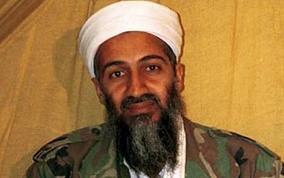
Two men made the news this week.  Their stories are ones of contrast, the contrast we find often in today's world.  One man chose to speak about the importance of all human life and its dignity; the other was responsbile for fueling a hatred that ended up in the taking of thousands of innocent human lives.  What causes such contrast in persons?  We can never really enter into the mind and heart of anyone else; we can only see the results of their behavior(s).  Judgments will be made about their lives and why they said or did what they said or did.  Some will have thoughts of praise for either of them and others thoughts of criticism or condemnation.

The first man was born on May 18, 1920 in Wadowice in Poland.  Christened Karol Josef Wojtyla he would grow up in a country that knew tyranny and oppression first under the Nazis and then under the Polish communist state.  He would lose his mother when he was only eight years of age; an elder sister died in infancy before he was born; his older brother became a physician but died from scarlet fever.  He was reared by his father who later died in 1941 leaving the young man (at age 20) without any other family.  He became a poet and playwright and studied languages at the university in Krakow until it was closed by the Nazis in 1939.


During the Nazi occupation he worked as a messenger and a manual laborer.  He began studies in a clandestine seminary to prepare him for his vocation as a Catholic priest.  He was ordained to the priesthood in 1946 and began a path of ascendancy in the Church which would eventually lead him to become an archbishop (later admitted to the College of Cardinals) and finally in October of 1978 the 246th pope of the Catholic Church taking the name of John Paul II (in honor of his immediate predecessor).

John Paul II would eventually lead the Church for over 26 years becoming one of the most influential men ever to sit in the Chair of Peter.  He would travel extensively (visiting 129 countries), write numerous encyclicals and become a key figure in the demise of communism in eastern Europe.  The former Soviet leader Mikhail Gorbachev once said: The collapse of the Iron Curtain would have been impossible without John Paul II.

This past week the Church recognized his life and virtues by raising him to the ranks of the blessed in a beatification ceremony presided over by his successor Pope Benedict XVI.  He may now be revered by the faithful as Blessed John Paul II .  John Paul II had his critics from both within and without of the Church.  Within the Church he was seen by some as being too conservative and not allowing the spirit of the Second Vatican Council to be fully implemented.  Regardless of these criticisms his piety and personal holiness were well regarded and his championing of human rights and the dignity of the human person is well documented and appreciated.

On March 10, 1957 a child was born to a wealthy and influential family in Saudi Arabia.  The young man whose name was Osama bin Laden was a devout and religious young man, mild mannered and soft spoken.  He studied economics and business administration and was involved in a variey of charitable works.  Like Karol Wojtyla, he too was a poet.  Somewhere along the line as he grew older he began to see what he considered the need to impose a very strict approach to Sharia (Muslim) law.  He would finally take this approach to its extreme and would end up being isolated from his home in Saudi Arabia.  He began to recruit others to his way of thinking from which would grow a network of followers pledged to him and to his extreme ways.  He developed an animosity for four particular "enemies" (in his thinking): the State of Israel, Shia Muslims, heretics, and the United States of America.

Through his teaching and training of others he would end up being responsbile for the death of thousands of innocent people through various terrorist attacks on a number of places and peoples, the most glaring being the attack on the United States on September 11, 2001 where targets were struck in New York City and Washington.

There we have a tale of two men: one who chose life and proclamation of the dignity of all human life and the other who chose violence as a means of carrying out his extreme views.  We can see why Karol Wojtyla arrived at his views through his study of Scripture and the following of Jesus Christ.  Why did bin Laden choose the path he chose?  His followers, who will certainly consider him a martyr, would say he was following his beliefs in the purity of Islam and how it must be the way the world should go.  I would wonder, however, how his approach to life (and the taking of human life) is consonant with the message of the Qu'ran where we read in Surah 25:

And the servants of Allah, Most Gracious, are those who walk on the earth in humility, and when the ignorant address them, they say, "Peace!"  (25:63); or

Those who invoke not, with Allah, any other god, nor slay such life as Allah has made sacred except for just cause...and any that does this (not only) merits punishment.  (25:68); or

...The penalty on the Day of Judgment will be doubled to him, and he will dwell therein in ignominy.  (25:69); or

Unless he repents, believes and works righteous deeds, for Allah will change the evil of such persons into good, and Allah is Oft-Forgiving, Most Merciful.  (25:70)

The world can rightfully judge the actions of Osama bin Laden as violent and cruel resulting in the loss of many human lives.  The final judgment of his life remains, however, not with us but with God.  We may feel relief that a "most wanted criminal" has been brought to justice but we can also be assured that this will not necessarily end terrorism or actions of such violence against others.  We can only hope for the peace that John Paul II so often would pray for.  Let me share a prayerful thought written by Father John Walsh of Maryknoll:

Let us become lovers of God and enablers, enabling people to encounter a loving, liberating God.  Let us grow as co-seekers of the trust with others and reconcilers, conscious of our own trespasses and forgivers of our enemies.  Let us be promoters of life in all stages and celebrators, giving voice to the love, joy, and longing and aspirations of peace makers.

Blessed John Paul II, pray for us and pray that the peace so close to your own heart may descend upon the peoples of the world.

Saturday, April 30, 2011

Tragedy and Hope


What a week it has been!  We have witnessed great tragedy and also great hope.  The tragedy is, of course, the devastation caused by the hundreds of tornadoes that came to ground in the southern part of our United States.  Homes, schools and churches have been completely demolished leaving hundreds dead and thousands without shelter and a future of trying to rebuild almost from nothing.


Across the ocean our British cousins have seen a week of great joy and pageantry with the royal wedding of Prince William and Kate Middleton.  Quite a contrast.  In our local newspaper a person wrote to the Letters to the Editor section that the coverage of the wedding was a silly distraction.  With all the problems in the world - wars and poor economy, etc. - he accused the media of focusing on "some prince from England getting married."

Yes the media gave a lot of attention to this wedding and characteristically of the media it went somewhat overboard.  But the starkness of the two contrasting stories was so evident on the evening TV newscasts when the cameras would go from pictures of wreckage and heartbreak to the joy of the kiss of the royal couple.  For some, watching the news is something they avoid because all it seems to focus on is "murder and mayhem."  Yet we have witnessed this week that even in the midst of tragedy as we have seen, we can still enjoy the new hope that comes from watching a young couple - famous though they be - begin a new life with joy and happiness and a look to the future.

Isn't this what life is about?  We have our share of disappointments and tragedies (seems we have had too many recently) but we also have moments of great joy - moments which uplift us and give us hope that there is still good in the world.  This is what we in the Christian tradition have just celebrated again in recalling the resurrection of Jesus who came to conquer sin and give us new life and hope.

I say: God's blessings on the royal couple.  May their days and years ahead be filled with joy and with a dedication to the people they serve.  Our prayers also go out to all those devastated by the horrible weather during this past week.  As we have done with other tragedies, I am sure the American people will rise to the occasion with donations to assist those in need.

We have seen human life played out in all its dimensions during this past week.  May God give us the strength to continue to brave the dark elements in our lives and glory in the bright and beautiful ones.

Sunday, April 24, 2011

A Big Blogger Thank You


As we begin the Easter season, let me thank the many people who have read my blog during the past week - particularly my post concerning a reflection for Holy Week.  Over 130 pageviews were recorded reaching countries in North America, Europe, Africa and Asia.

It is truly humbling to know that through the wonders of our technological age we can share our thoughts in this way and know that people for whatever reason choose to read them.  I am grateful and I just wish I could thank each reader in person; allow this post, however, to speak my thanks.  My hope is that the words I share may resonate with the readers and that they will have gotten something from my reflections on this most sacred week in our Church.

May God bless you all and may you have a blessed Easter season!

Friday, April 15, 2011

A Holy Week Reflection

We about to enter once again the most sacred week in the Christian calendar - Holy Week - when we commemorate the Passion, Death and Resurrection of Jesus Christ.  Allow me to share a few thoughts about this most important time in our Church year.


Palm Sunday


The sky is bright on this warm day - the first day of the week.  At the entrance to the holy city of Jerusalem near Bethpage on the Mount of Olives a crowd begins to gather.  Soon someone shouts:  "He is coming!"  With a flurry of activity the people begin to tear branches off the nearby trees and spread their cloaks on the road as a man in the company of some friends enters the city astride a donkey.  Cheers erupt:  "Hosanna to the Son of David!"  they shout.  "Blessed is he who comes in the name of the Lord!"  The crowd is going wild with adulation for this man and when asked by some bystanders who it is they tell them it is the prophet from Nazareth - Jesus by name.  The frenzy of the crowd continues prompting some of the Pharisees to call out to this Jesus that he should rebuke his disciples and tell them to be silent.  His response:  "I tell you, if they keep silent, the very stones will cry out!"

Obviously the crowd is expecting much from this man - the one that some feel is the long awaited Messiah expected by Israel.  This day is a day of triumph; their leader, the one upon whom they pin their hopes for Israel is among them.  Then what does he do?  He enters the precinct of the temple - the most sacred place in Judaism.  He sees moneychangers and others selling goods within the temple precinct and his righteous anger comes forth.  He takes a whip made of cords and begins to overturn the tables of the moneychangers and reminds them of the Scripture passage that says "My house shall be a house of prayer, but you are making it a den of thieves."  He then leaves the city to return the next day to begin to teach the people within the temple precincts.  His authority is challenged by the temple leaders but he proceeds by way of parables to bring God's message to the people.  He issues fiery condemnations to the leaders - the Scribes and Pharisees - whom he calls hypocrites for a number of reasons.  The stage is being set for the climax of the drama by which Jesus will be condemned and finally meet his death.


Dear Jesus, your entry into Jerusalem was a triumphant one.  You were hailed as the Messiah, the Son of David.  The people were placing their hopes in you to bring them out of bondage as Moses had done of old.  But the bondage they wanted freedom from was not the one you came to deliver from - it was rather the bondage of sin, the sin of people down through the ages - those past and those to come.  How many of those who cried out "Hosanna" to you on this Palm Sunday would be among those crying for your blood just a few days hence?   Help us to realize that your gift to us was not one of power but one of love and forgiveness for all the things we had done or failed to do for you and for others.  Help us to be reminded of the gratitude we owe to you for your sacrifice on our behalf.


Holy Thursday


Dusk has come and the shades of night are falling when a group moves toward a building and climbs to its upper floor where they will share - as their ancestors of old - the Passover meal.  The man Jesus who was acclaimed a few days ago by the people as he entered the city now seems to be in a reflective mood as he reclines at table with his disciples to begin the sacred traditional meal.  In the Jewish tradition the youngest at table asks the question about why this night is different from other nights.  Perhaps this task fell to the young disciple, John.  The meal proceeds and Jesus takes the opportunity to speak of many things with his disciples - to help prepare them for what lies ahead.


Then, in a move considered very uncharacteristic of the rabbi or leader, Jesus removes his outer garment and fills a basin with water and begins to wash the feet of his disciples - a task always carried out by a servant or slave.  The disciples are no doubt stunned by this turn of events - why is the Master acting like a servant?  When he comes to Peter, Peter in his characteristic way tells Jesus - as Master he should never wash Peter's feet!  When Jesus tells him he will have no part with him unless he allows this, a typical Petrine response is forthcoming:  "Then not only my feet but my head and hands as well!"  Jesus is the servant and presents to his disciples what kind of role they should play as leaders of the Christian community to come - servant leaders not authoritative leaders.


As the meal draws to its close, Jesus takes some of the unleavened bread into his hands and offers it to the disciples telling them "This is my body."  He then offers them a cup of wine telling them "This is my blood of the covenant."  He tells them to continue to do this action in memory of him.  They then go forth into the night and the drama of the Passion begins.

Jesus, what great gifts you have given us as we recall this sacred night.  First the example of the type of disciples we should be - servants and not those out to show how important we are.  You - the God-man - got down on your knees to wash the disciples' feet.  We are to wash the feet of others - by our works of charity and by bringing the message of your love to others.  Second the very gift of yourself in the Eucharist to provide us with the nourishment we need to lead good Christian lives.  May we never take your gifts for granted.

Good Friday

After leaving the meal the disciples and Jesus proceed to the Garden of Gethsemane.  Here he begins to fully realize what is in store for him because of the message he has been bringing.  Like the prophets of old who were condemned by the leaders of Israel when the prophets dared to speak God's word - a word the leaders did not want to hear - Jesus would suffer the punishment of daring to speak God's word in his time to those whose hearts were hardened.  Three times he enters into private prayer with his Father begging that the cup of suffering be removed but reconciling himself to the fact that it will come to pass.  Then the drama escalates.

A group of temple guards and others approach the disciples' group in the garden.  One of the chosen twelve - Judas Iscariot - will point out Jesus to them by offering him a kiss - a kiss of betrayal.  Jesus is bound and taken to the high priest and ultimately before the ruling Jewish body - the Sanhedrin.  The high priest will challenge him as to whether he is the Messiah and upon hearing Jesus' response rends his garments signaling what he terms a "blasphemy."

The Jews were not allowed to put anyone to death under Roman rule so the final arbiter in the case had to be the Roman governor - Pontius Pilate.  Pilate tries to find a way to free Jesus but gives away to the rabble who cry for Jesus' crucifixion - the ultimate form of death pronounced on those who were not citizens of Rome.  The walk to Calvary begins but not before Jesus is scourged and a crown of thorns placed upon his head as a form of mockery by the Roman soldiers.


The procession arrives at Calvary - the "Place of the Skull."  Jesus is thrown down upon the cross beam that he has been forced to carry from the Praetorium to this place.  Large nails are hammered into his wrists tearing the flesh and bringing about what must have been excruciating pain.  He is then lifted onto the pole of the cross and his feet are likewise rent with a large nail.  There he must hang - trying to gasp for breath, trying to rise up on his painful feel to catch such a breath and then fall back down pulling the flesh in his wrists and hands.


Standing at the foot of the cross are some of the faithful women disciples (the men all having fled out of fear) including the most perfect disciple - Jesus' own mother, Mary.  What suffering she must have undergone to not only see her Son die but die in this most horrible way.  When Jesus finally "gives up the spirit" he is taken down and placed in the arms of his mother.  How she must have wept as she cleared the blood and sweat from his now dead face and remembering when she held him as an infant and rocked him to sleep.

Once Jesus told those around him that the Son of Man had no place to lay his head.  Even at this moment of death he would have to rely on another to give him a final resting place.  An unused tomb, owned by one of the members of the Sanhedrin (Joseph of Arimathea), is provided and because the Sabbath was beginning the body was laid there to rest and the burial party departs.

Mary, Mother of Sorrows, how painful it must have been for you to witness the death of your Son.  You would weep for his suffering but somehow you would know that God would not forsake him or you.  You were always the model disciple - the one who would carry out God's will as you stated at your Annunciation:  "Be it done unto me accoding to your word."  Help us to realize how our sins have contributed to Jesus' suffering but also help us to know that we are never abandoned by God no matter what we have done or have failed to do.  God, through Jesus' death, has reconciled the world to himself and we are therefore reconciled.  Let us never forget it.

Holy Saturday

This is a quiet day.  The disciples are reeling with shock over what has happened to their Master.  Mary remains in quiet reflection.  The world, as it were, comes to a standstill as it awaits the next part of the drama - a part foretold by Jesus but still one which the world would not have expected.

Something strange is happening - there is a great silence on earth today, a great silence and stillness.  The whole earth keeps silence because the King is asleep.  The earth trembled and is still because God has fallen asleep in the flesh and he has raised up all who have slept ever since the world began.  God has died in the flesh and hell trembles with fear....

For your sake I, your God, became your son; I, the Lord, took the form of a slave; I, whose home is above the heavens, descended to the earth and beneath the earth.  For your sake, for the sake of man, I became like a man without help, free among the dead.  For the sake of you, who left a garden, I was betrayed in a garden, and I was crucified in a garden....

...(T)he eternal dwelling places are prepared, the treasure houses of all good things lie open.  The kingdom of heaven has been prepared for you from all eternity.

(Office of Readings- Holy Saturday Roman Rite)
\
Easter Sunday


The faithful women trudge toward the site of the borrowed tomb.  Because the Sabbath had begun when Jesus was taken down from the cross they were unable to properly prepare the body for burial according to their custom.  A guard had been posted by the tomb at the request of the Jewish leaders who were afraid the body might be stolen and a fabrication started that he had risen from the dead.  The guards allow the women to proceed to the tomb to carry out their ritual.  They wonder, however, who would roll back the heavy stone at the entrance of the tomb since the soliders made no offer to do so.  Then they see that the stone had already been rolled back.  Upon entering the tomb they are met by a young man who asks them why they seek the living among the dead - he tells them that Jesus has risen from the dead.

One of the women - Mary of Magdala - sits weeping near the tomb wondering what really happened.  Then she spies a man she believes is a gardener to ask him where the body might have been taken.  It is then that her eyes are opened and she beholds her Master - "Rabboni" she cries.  He tells her to return to his disciples and tell them that Jesus has been raised and will go before them into Galilee.  The early definition of an "apostle" was "one who had witnessed the Resurrection."  Mary Magdalene then becomes "the apostle to the apostles" and goes forth to tell them the good news.


Alleluia!  He is risen!  Beloved Jesus, the Father rewarded you for your great offering of yourself to save us from our sins.  You now sit at the right hand of the Father and continue to bless your Church and all of us as we struggle to live out our Christian lives.  We will know crosses just as you did; we will know rejection and pain but we also know that we will one day glory in the same way as you now do in erternity with the Father and Holy Spirit.  Lord Jesus, how much we owe you!  In our human weakness we can never truly express the gratitude we should have but we know that you are with us always loving and sustaining us until the day we shall see your face in all its glory.  Amen.